
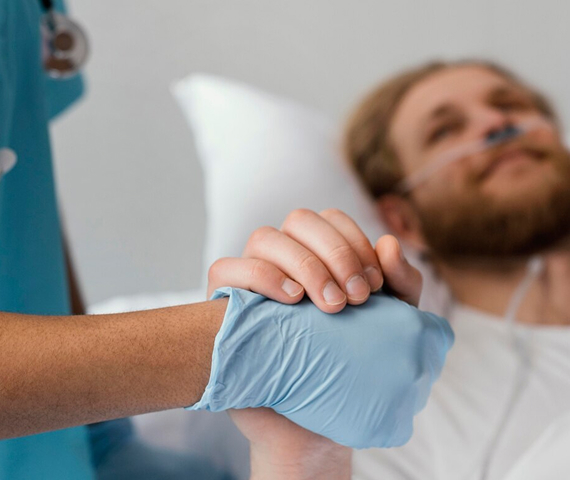
Iron infusion (intravenous iron injection) in Casablanca: day-hospital treatment of iron deficiency and iron-deficiency anaemia under medical supervision, when oral iron is insufficient, poorly tolerated or too slow.
An iron infusion — intravenous (IV) iron — corrects iron deficiency or iron-deficiency anaemia quickly when iron tablets are not enough, are poorly tolerated or work too slowly. The iron is given directly into a vein, as a day-hospital procedure, by the nursing team at Clinique Riviera under medical supervision.
When is an iron infusion indicated?
- Iron-deficiency anaemia confirmed by blood tests (haemoglobin, ferritin, transferrin saturation)
- Digestive intolerance to oral iron, or no improvement after several weeks of tablets
- Iron deficiency due to heavy periods, pregnancy (from the second trimester) or after childbirth
- Chronic kidney disease and patients on dialysis
- Inflammatory bowel disease, bariatric surgery or other causes of malabsorption
- Heart failure with iron deficiency
- Preparing an anaemic patient for surgery
The decision is made by the doctor after reviewing your blood results. An iron infusion does not replace looking for the cause of the deficiency, which is part of the care.
What happens during an iron infusion at the clinic?
- Consultation and blood tests to confirm the deficiency and calculate the dose you need
- A cannula is placed in a vein and the iron is infused slowly, usually over 15 to 60 minutes depending on the product and dose
- The nursing team monitors you during the infusion and for about 30 minutes afterwards
- You go home the same day — no overnight stay
One or two sessions are usually enough to deliver the full calculated dose. A follow-up blood test is scheduled four to eight weeks later to check that haemoglobin and iron stores have recovered.
Iron infusion or iron tablets?
Iron tablets remain the first-line treatment in many situations. The intravenous route delivers the entire dose in one or two sessions, avoids the digestive side effects of tablets (nausea, constipation, abdominal pain) and corrects the deficiency faster. It is preferred when anaemia is marked, when oral iron has failed or is not tolerated, or when rapid correction is needed.
Does it hurt? What are the side effects?
The infusion itself is painless: you only feel the cannula being placed, as with a blood test. Treatment is generally well tolerated. Transient effects are possible — headache, nausea, flushing, a metallic taste, joint or muscle aches in the days that follow, and with some products a temporary drop in blood phosphate. Allergic reactions are rare, which is precisely why the infusion is always given under supervision with the necessary equipment at hand. A lasting brown staining of the skin can occur if product leaks out of the vein; the team checks the drip carefully to prevent this.
Contraindications and precautions
- First trimester of pregnancy
- Previous allergic reaction to an injectable iron
- Iron overload, or anaemia not caused by iron deficiency
- Ongoing infection: the infusion is postponed
Tell the team about your current medicines, allergies, pregnancy or breastfeeding, and any history of asthma or severe eczema. These precautions are reviewed at the consultation.
How much does an iron infusion cost in Casablanca?
The price depends on the product used, the dose required and the number of sessions. You receive a quote before treatment, and our admissions team checks your insurance cover with you. Contact the clinic’s reception for an estimate suited to your situation.
Practical information
What to prepare before your visit for iron Infusion (IV Iron) — Casablanca.
Consultation and blood tests
The doctor confirms the iron deficiency with a blood test, looks for its cause and calculates the dose to be given.
Day-hospital appointment
The session is booked for an agreed date. No fasting is needed; bring your blood results and a list of your current medicines.
The supervised infusion
The iron is given slowly through a vein over 15 to 60 minutes depending on the dose, with monitoring during and after the session. You go home the same day.
Check-up and follow-up
A follow-up blood test is scheduled four to eight weeks later. Bring your ID, insurance card and results to every visit.
Frequently asked questions — Iron Infusion (IV Iron)
Answers to the questions our patients ask most often.
What does the Iron Infusion (IV Iron) department at Clinique Riviera in Casablanca cover?
Iron infusion (intravenous iron injection) in Casablanca: day-hospital treatment of iron deficiency and iron-deficiency anaemia under medical supervision, when oral iron is insufficient, poorly tolerated or too slow. Care provided: Iron-deficiency anaemia confirmed by blood tests (haemoglobin, ferritin, transferrin saturation) ; Digestive intolerance to oral iron, or no improvement after several weeks of tablets ; Iron deficiency due to heavy periods, pregnancy (from the second trimester) or after childbirth ; Chronic kidney disease and patients on dialysis ; Inflammatory bowel disease, bariatric surgery or other causes of malabsorption ; Heart failure with iron deficiency ; Preparing an anaemic patient for surgery ; Consultation and blood tests to confirm the deficiency and calculate the dose you need ; A cannula is placed in a vein and the iron is infused slowly, usually over 15 to 60 minutes depending on the product and dose ; The nursing team monitors you during the infusion and for about 30 minutes afterwards ; You go home the same day — no overnight stay ; First trimester of pregnancy ; Previous allergic reaction to an injectable iron ; Iron overload, or anaemia not caused by iron deficiency ; Ongoing infection: the infusion is postponed.
How do I book a iron infusion (iv iron) appointment in Casablanca?
Call Clinique Riviera on +212 537 01 55 03 or come to reception at 301 Boulevard Ghandi, Casablanca 20000. The clinic is open 24/7 and its emergency department handles urgent cases at any hour.
What should I bring to a iron infusion (iv iron) appointment?
Your ID (national card or passport), your insurance card or certificate, and any medical reports, imaging results and current prescriptions. If your doctor gave you a sealed referral letter, bring that too.